CAS 527-07-1 | C₆H₁₁NaO₇ | Molecular Weight: 218.14 — A technical reference covering the manufacturing process, quality control parameters, and application dosage recommendations for this versatile green chelating agent.
Table of Contents
1. Overview of Sodium Gluconate
2. Industrial Production Process
3. Quality Standards & Technical Specifications
4. Role in Concrete Admixtures: Mechanism & Dosage
5. Chelating Applications in Industry
6. Water Treatment Applications
7. Compatibility & Formulation Guidelines
8. Packaging, Storage & Transportation
9. About Shenyang Xingzhenghe Chemical
10. FAQ
1. Overview of Sodium Gluconate
Sodium gluconate (CAS 527-07-1) is the sodium salt of gluconic acid, a polyhydroxy carboxylic acid with the molecular formula C₆H₁₁NaO₇. Its structure features a six-carbon backbone bearing five hydroxyl groups (-OH) and one carboxylate group (-COO⁻Na⁺), which together provide strong chelating capacity toward divalent and trivalent metal ions such as Ca²⁺, Mg²⁺, Fe³⁺, Cu²⁺, and Al³⁺.
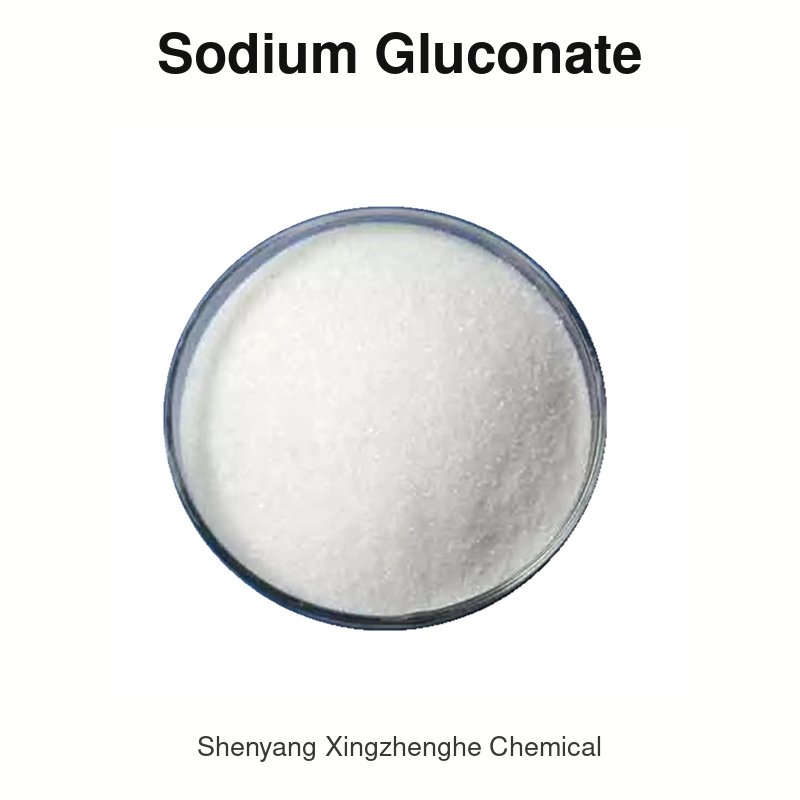
As a white to light beige crystalline powder with high water solubility (590 g/L at 25 degrees Celsius), sodium gluconate is non-toxic, fully biodegradable, and chemically stable under normal storage conditions. These properties have established it as a widely used industrial chemical across construction, water treatment, cleaning, electroplating, and textile sectors.
Key characteristic: Unlike most corrosion inhibitors, sodium gluconate’s inhibition efficiency actually increases with rising temperature, making it suitable for high-temperature concrete systems and variable-temperature industrial water circuits.
2. Industrial Production Process
Sodium gluconate is manufactured through a biological fermentation process followed by chemical neutralization and purification. The standard production route involves the following steps:
2.1 Glucose Fermentation
The raw material is glucose syrup, typically derived from corn starch hydrolysis. Microorganisms — primarily Aspergillus niger or Gluconobacter suboxydans — catalyze the oxidation of the aldehyde group (C-1) of glucose to a carboxyl group, producing gluconic acid.
Fermentation temperature: 30-35 degrees Celsius
pH range: 5.5-6.5 (controlled by automatic dosing of alkali or acid)
Fermentation time: 20-40 hours depending on strain and conditions
Conversion rate: Typically above 95% under optimized conditions
2.2 Neutralization
The resulting gluconic acid solution is neutralized with sodium hydroxide (NaOH) to form sodium gluconate:
C₆H₁₂O₇ (gluconic acid) + NaOH → C₆H₁₁NaO₇ (sodium gluconate) + H₂O
The neutralization endpoint is determined by pH monitoring, typically reaching pH 6.5-7.5. Precise control of NaOH dosing is critical to avoid excess alkalinity in the final product.
2.3 Purification, Concentration & Crystallization
After neutralization, the solution undergoes:
Filtration: Removal of microbial biomass and insoluble impurities using plate-and-frame filter press or centrifugal separation.
Activated carbon decolorization: Treatment with food-grade activated carbon to reduce color and remove organic impurities.
Evaporation & concentration: Vacuum evaporation to concentrate the solution to approximately 50% solid content.
Crystallization: Controlled cooling crystallization in stirred crystallizers. Seed crystals may be added to promote uniform crystal growth.
Centrifugation & drying: Crystals are separated by centrifuge and dried in a fluidized bed dryer at 60-80 degrees Celsius to achieve moisture content below 1.5%.
Process note: The fermentation route offers a significant advantage over chemical synthesis — it operates at ambient pressure, uses renewable feedstock (corn starch), and generates no hazardous byproducts, aligning with green chemistry principles.
3. Quality Standards & Technical Specifications
Industrial-grade sodium gluconate is typically evaluated against the Chinese national standard GB/T 23878-2009 (Food Additive – Sodium Gluconate) or equivalent international specifications. The following table summarizes the key quality parameters:
Parameter Specification Test Method
Appearance White to light beige crystalline powder Visual inspection
Purity (sodium gluconate content) ≥ 98.0% Titration / HPLC
Moisture content ≤ 1.5% Karl Fischer / drying method
pH (100 g/L solution) 6.5 – 8.0 pH meter
Reducing substances ≤ 0.5% Iodometric titration
Chloride (Cl⁻) ≤ 0.05% Silver nitrate titration
Sulfate (SO₄²⁻) ≤ 0.05% Barium chloride turbidimetry
Heavy metals (as Pb) ≤ 20 ppm AAS / ICP-OES
Iron (Fe) ≤ 0.002% Phenanthroline colorimetry
Arsenic (As) ≤ 1.0 ppm Atomic absorption / AFS
Specific rotation [α]D²⁰ +11° to +13° (c=10, H₂O) Polarimeter
Quality impact on concrete performance: Excessive reducing substances (residual glucose) in sodium gluconate can cause unpredictable setting retardation in concrete. Specify ≤ 0.5% reducing substances to ensure consistent retarder performance.
4. Role in Concrete Admixtures: Mechanism & Dosage
The construction industry accounts for approximately 40-50% of total global sodium gluconate consumption. Its functions in concrete technology are multifaceted:
4.1 Retarding Mechanism
Sodium gluconate delays cement setting through two primary mechanisms:
Calcium ion chelation: The gluconate anion forms stable chelate complexes with Ca²⁺ ions released during tricalcium silicate (C₃S) hydration. By reducing the free Ca²⁺ concentration in the pore solution, it delays the nucleation and growth of calcium silicate hydrate (C-S-H) gel and portlandite (Ca(OH)₂) crystals.
Surface adsorption: Gluconate ions adsorb onto the surfaces of cement particles and early hydration products, forming a protective barrier that slows water penetration and subsequent hydration reactions.
4.2 Water-Reducing Effect
While not as strong as dedicated superplasticizers, sodium gluconate contributes a water reduction rate of approximately 8-12% when used alone. In compound systems with polycarboxylate superplasticizers (PCE), it enhances workability retention by preventing rapid consumption of the PCE through competitive adsorption on cement surfaces.
4.3 Recommended Dosage
Application Mode Dosage (% by weight of cement) Expected Effect
Retarder only 0.03% – 0.10% Extends initial setting by 1-4 hours
Compound with PCE (water reducer component) 0.01% – 0.05% Workability retention 1-2 hours, water reduction 15-25%
Hot-weather construction 0.05% – 0.15% Counters temperature-accelerated setting, slump retention improvement
Mass concrete 0.03% – 0.08% Reduces peak hydration heat, minimizes thermal cracking risk
Dosage caution: Excessive sodium gluconate (> 0.2% of cement weight) may cause severe retardation, prolonged setting, or incomplete strength development. Always conduct trial mixes with the actual cement, supplementary cementitious materials, and other admixtures before determining the final dosage.
5. Chelating Applications in Industry
Beyond concrete, sodium gluconate serves as an effective and environmentally benign chelating agent across multiple industrial sectors:
5.1 Industrial Cleaning
Steel surface treatment: Added to alkaline cleaning formulations for degreasing and rust removal before electroplating (zinc, chromium, tin, nickel). Chelates Fe²⁺/Fe³⁺ ions, preventing re-deposition of dissolved oxides.
Glass bottle washing: Replaces phosphate-based cleaners in bottle washing compounds. Provides effective descaling of calcium deposits without nozzle clogging or harmful residue.
Equipment descaling: Dissolves calcium carbonate and calcium sulfate scale in heat exchangers, boilers, and pipelines while being less corrosive to base metals than mineral acids.
5.2 Electroplating & Metal Finishing
Plating bath stabilizer: Maintains uniform metal ion concentration in electroplating solutions, ensuring smooth and even deposits.
Aluminum anodizing: Functions as a complexing agent in aluminum oxide coloring processes, improving color uniformity.
Pre-treatment cleaning: Removes oxide films and surface contaminants from metal substrates prior to coating, plating, or painting.
5.3 Textile Dyeing
Water softening: Chelates Ca²⁺ and Mg²⁺ in process water, preventing interference with dye chemistry and ensuring uniform coloration.
Dye bath stabilization: Prevents metal-catalyzed oxidation and shade drift of sensitive dyes, improving batch-to-batch reproducibility.
Equipment protection: Inhibits scale formation in dyeing machinery, reducing maintenance downtime.
6. Water Treatment Applications
Sodium gluconate functions as a circulating cooling water stabilizer, offering both scale inhibition and corrosion protection:
6.1 Scale Inhibition
By forming soluble complexes with Ca²⁺ and Mg²⁺ ions, sodium gluconate prevents the precipitation of calcium carbonate (CaCO₃) and calcium sulfate (CaSO₄) scale on heat transfer surfaces. The chelation threshold effect allows effective scale control even at dosages well below stoichiometric requirements.
6.2 Corrosion Inhibition
Sodium gluconate forms protective chelate films on ferrous and non-ferrous metal surfaces, reducing the rate of general corrosion. Its inhibition efficiency increases with temperature — a distinctive advantage over conventional inhibitors whose performance typically degrades at elevated temperatures.
6.3 Synergistic Formulations
In practice, sodium gluconate is rarely used alone in water treatment. It is typically combined with:
Molybdate-based systems: Enhanced anodic corrosion protection for closed-loop cooling circuits.
Phosphonate blends: Complementary scale inhibition through multi-mechanism action.
Zinc salts: Rapid cathodic protection during system startup.
Tungsten-based formulations: Environmentally friendly alternatives for systems requiring zero-phosphorus discharge.
7. Compatibility & Formulation Guidelines
Understanding sodium gluconate’s compatibility with other admixture components is essential for formulating effective compound products:
Admixture Component Compatibility Notes
Polycarboxylate superplasticizer (PCE) Excellent Synergistic effect: PCE provides dispersion, sodium gluconate provides retardation and slump retention
Naphthalene-based superplasticizer (SNF) Good Compatible; sodium gluconate compensates for SNF’s rapid slump loss
Melamine-based superplasticizer (SMF) Good Compatible; similar synergistic behavior as with SNF
Calcium chloride (early-strength accelerator) Poor Mutually antagonistic: calcium chloride accelerates while sodium gluconate retards. Avoid combining.
Aluminum powder (AAC foaming agent) Moderate May slow gas generation rate; adjust dosage through trial
Defoamer Good No interaction; add defoamer independently
Air-entraining agent Good Compatible; monitor air content as sodium gluconate may slightly affect bubble stability
Formulation tip: When compounding sodium gluconate with PCE in a liquid admixture, dissolve sodium gluconate in water first, then add the PCE solution. This prevents localized high concentrations that could cause compatibility issues.
8. Packaging, Storage & Transportation
Packaging
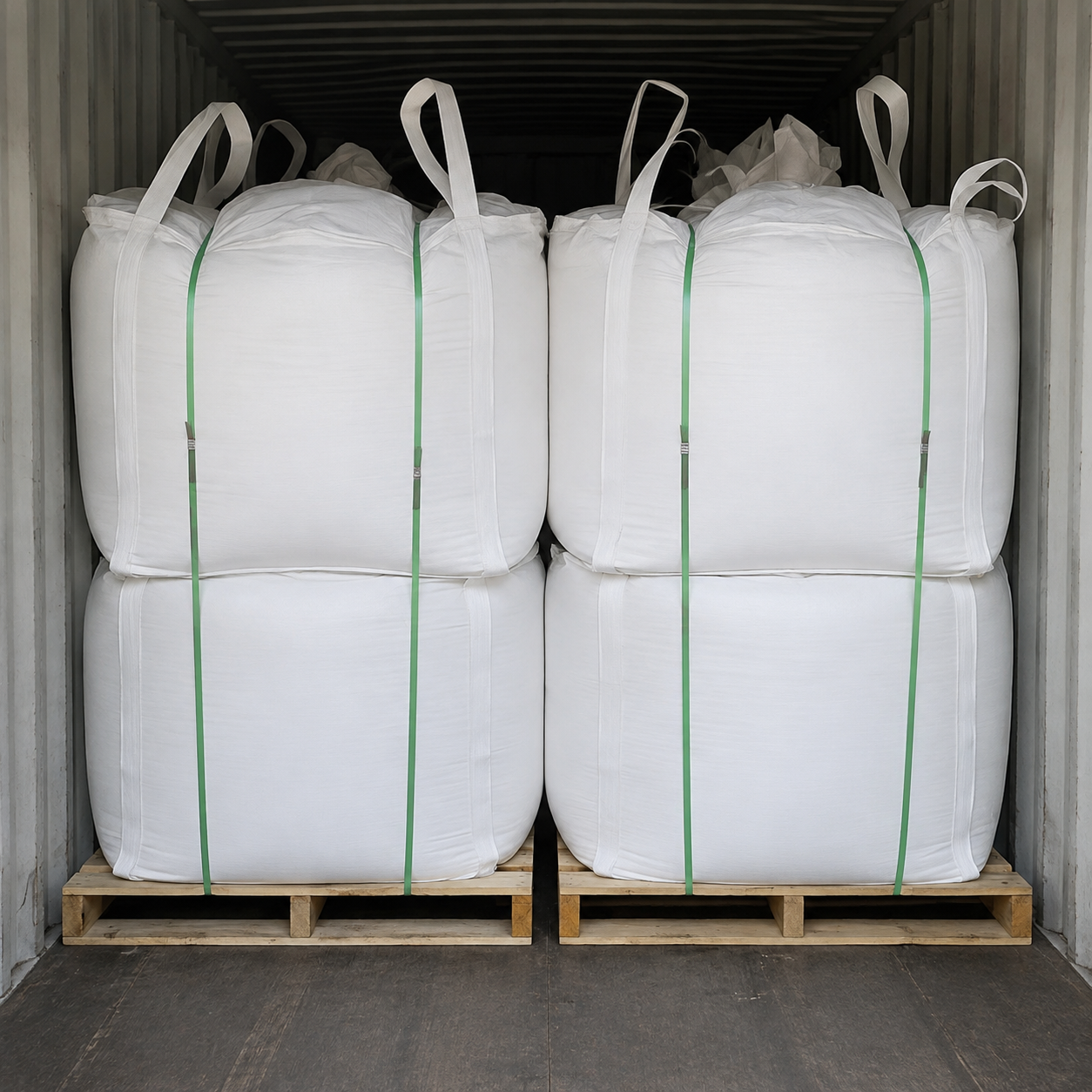
Sodium gluconate is packaged in 25 kg bags with PE inner liner and plastic woven outer bag. The inner liner provides a moisture barrier, while the woven outer bag ensures mechanical strength during handling and transport.
Storage Requirements
Store in a cool, dry, and well-ventilated warehouse.
Keep containers tightly sealed when not in use — sodium gluconate is hygroscopic and will absorb moisture from humid air.
Avoid direct sunlight and rain exposure.
Shelf life: 24 months when stored under recommended conditions.
Stack height should not exceed 10 bags to prevent compaction of lower bags.
Transportation
Sodium gluconate is classified as a non-hazardous substance (not listed in IMDG, IATA-DGR, or ADR). Transport according to general chemical product regulations. No special hazardous materials handling procedures or documentation are required.
9. About Shenyang Xingzhenghe Chemical
Shenyang Xingzhenghe Chemical Co., Ltd.
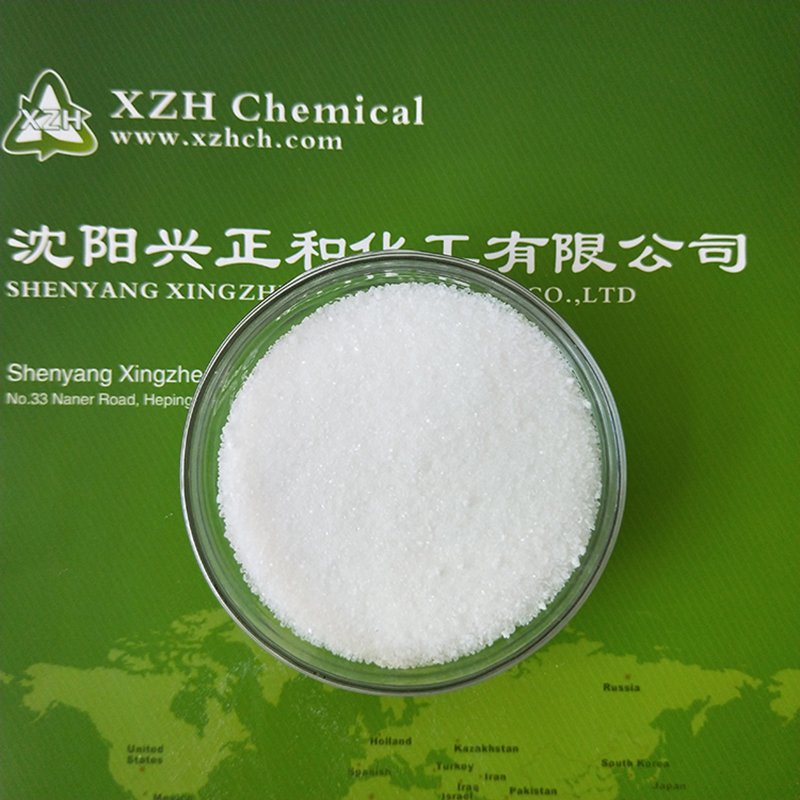
Shenyang Xingzhenghe Chemical is a professional chemical supplier based in Shenyang, Liaoning, China, specializing in concrete admixture raw materials, industrial chelating agents, and water treatment chemicals. We supply high-purity sodium gluconate (≥ 98%) with consistent batch quality, competitive pricing, and reliable export capability. Our products serve construction, cleaning, water treatment, electroplating, and textile industries worldwide. For technical data sheets, samples, or bulk inquiries, please contact our sales team.
10. FAQ
Q1: How is sodium gluconate produced industrially?
Sodium gluconate is produced through controlled fermentation of glucose (typically from corn starch) using microorganisms such as Aspergillus niger, followed by neutralization with NaOH, filtration, decolorization, concentration, and crystallization. The process is environmentally friendly and uses renewable feedstock.
Q2: What is the recommended dosage of sodium gluconate as a concrete retarder?
As a standalone retarder, the typical dosage is 0.03%-0.10% by weight of cement, extending initial setting by 1-4 hours. In compound admixtures with PCE, it is used at 0.01%-0.05% for workability retention and slump stabilization.
Q3: What quality parameters should be checked when purchasing sodium gluconate?
Key parameters include purity (≥ 98%), moisture (≤ 1.5%), pH (6.5-8.0), reducing substances (≤ 0.5%), chloride (≤ 0.05%), heavy metals (≤ 20 ppm), and appearance. These are defined in GB/T 23878-2009 or equivalent standards.
Q4: Can sodium gluconate be used with polycarboxylate superplasticizers?
Yes. Sodium gluconate and PCE are highly compatible and commonly used together. PCE provides cement dispersion and high water reduction, while sodium gluconate contributes setting retardation, hydration heat control, and slump retention — creating a well-balanced admixture system.
Q5: Why does sodium gluconate retard cement setting?
Sodium gluconate chelates Ca²⁺ ions released during cement hydration, reducing the free calcium concentration and delaying C-S-H gel formation. It also adsorbs on cement particle surfaces, forming a barrier that further slows water penetration and hydration.
Q6: Is sodium gluconate biodegradable?
Yes. Sodium gluconate is fully biodegradable and has low aquatic toxicity. It serves as an environmentally friendly alternative to EDTA and phosphate-based chelating agents in applications where biodegradability is a priority.
Q7: What is the shelf life of sodium gluconate?
When stored in a cool, dry, and well-ventilated warehouse in sealed containers, the shelf life is 24 months from the date of manufacture.