Why Is Sodium Gluconate Used in Concrete?
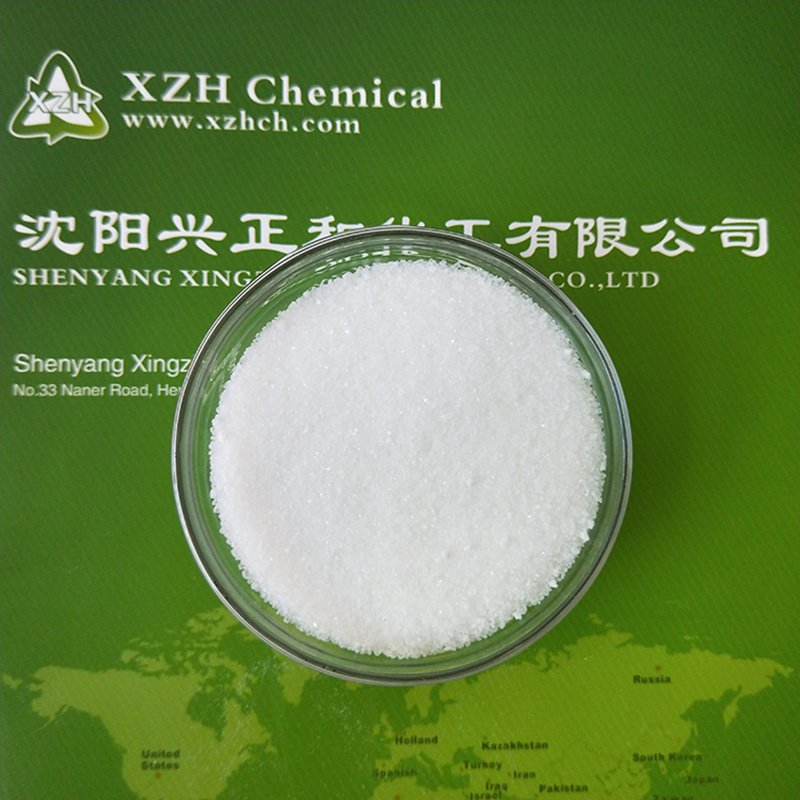
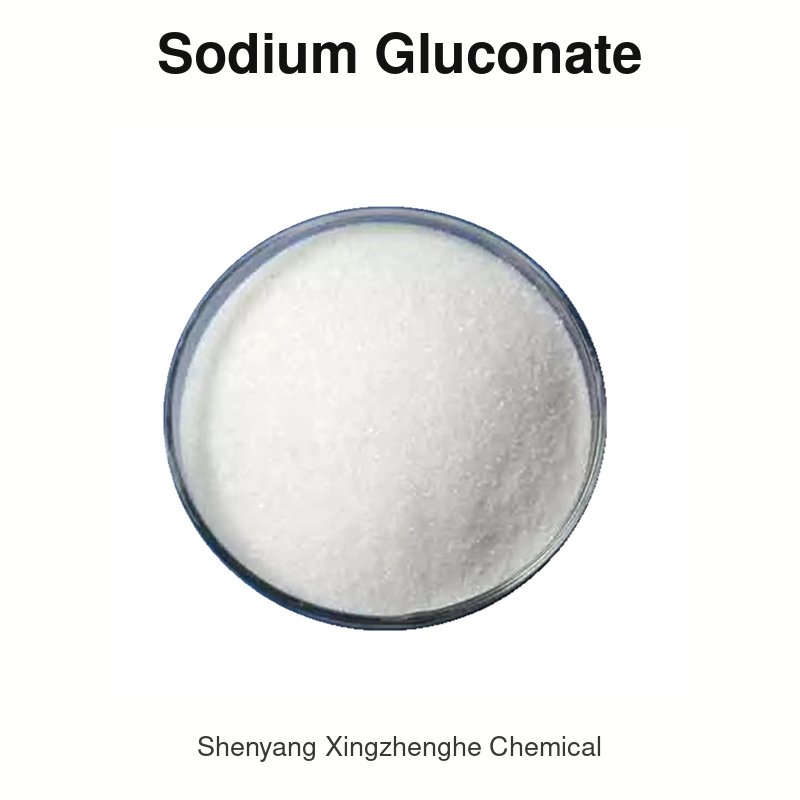
Sodium gluconate is the sodium salt of gluconic acid and is used in a range of industrial formulations.
In concrete admixture systems, one of its common functions is related to setting-time control.
It may be used as a retarding component in formulations where the concrete needs additional working time because of factors such as:
- higher ambient temperature;
- longer transportation distance;
- delayed placement;
- large-volume concrete pours;
- extended mixing or pumping periods.
However, sodium gluconate should not be considered a universal solution for every slump-loss or setting problem.
Its actual behavior depends on the complete cementitious system.
1. How Does Sodium Gluconate Affect Cement Hydration?
When cement comes into contact with water, hydration reactions begin.
The rate of these reactions is affected by many factors, including:
- cement mineral composition;
- temperature;
- water-to-cement ratio;
- supplementary cementitious materials;
- chemical admixtures.
Sodium gluconate can interact with calcium ions and cement hydration products.
In suitable systems, this interaction may slow certain early hydration processes and therefore extend the setting time.
This is why sodium gluconate is commonly studied as a retarding component in concrete admixture formulations.
The degree of retardation is not fixed.
It can vary with cement type, dosage and temperature.

sodium gluconate
2. Is Sodium Gluconate a Concrete Retarder?
Sodium gluconate is commonly used as a component in retarding admixture systems.
Its function is generally associated with delaying early cement hydration.
This can be relevant when additional working time is needed.
Typical situations may include:
- hot-weather concrete;
- ready-mix concrete transported over longer distances;
- mass concrete placement;
- concrete requiring extended handling time.
However, the required dosage should be determined through testing.
Too much retardation may delay setting beyond the intended construction schedule.
3. Is Sodium Gluconate the Same as a Slump-Retaining Agent?
No.
This distinction is important.
Retarding and slump retention are related to different aspects of concrete behavior.
Retarding
Refers mainly to the control of cement hydration and setting time.
Slump Retention
Refers to how well fresh concrete maintains its workability over time.
Sodium gluconate may influence both setting and workability indirectly, but it should not automatically be treated as a direct substitute for a dedicated slump-retaining PCE.
A formulation should be evaluated as a complete system.
4. Why Is Sodium Gluconate Often Used with PCE?
Polycarboxylate superplasticizer (PCE) is primarily used to improve cement-particle dispersion and adjust water demand and workability.
Sodium gluconate is mainly considered for its influence on hydration and setting.
Therefore, the two materials may be used together in some concrete admixture formulations.
A simplified way to understand their roles is:
PCE → dispersion and water reduction
Sodium gluconate → setting-time adjustment
But these functions are not completely independent.
Both materials interact with the cementitious system.
Therefore, when used together, the final result should be confirmed by concrete testing.
5. Can Sodium Gluconate Improve Slump Retention?
In some formulations, sodium gluconate may help maintain workability for a longer period because delayed hydration can reduce the rate of early stiffening.
However, this does not mean:
more sodium gluconate = better slump retention.
Excessive retardation may create other issues.
Possible concerns include:
- delayed initial set;
- delayed final set;
- changes in early-age strength development;
- longer finishing time;
- mismatch with construction scheduling.
Therefore, sodium gluconate should be used according to the target setting time and workability requirements.
6. What Factors Affect Sodium Gluconate Dosage?
There is no single dosage suitable for all concrete.
The required amount can be influenced by:
- cement type;
- cement fineness;
- clinker composition;
- sulfate balance;
- supplementary cementitious materials;
- water-to-binder ratio;
- ambient temperature;
- concrete temperature;
- PCE type;
- transportation time;
- required setting time.
This is why a dosage that works in one concrete plant may not produce the same result in another.
7. Why Does Cement Type Matter?
Different cements can vary considerably.
Differences may include:
- C3A content;
- C3S content;
- gypsum type;
- alkali content;
- fineness;
- limestone addition;
- slag;
- fly ash;
- other mineral components.
These factors can affect both cement hydration and the behavior of chemical admixtures.
As a result, sodium gluconate may produce different setting-time changes with different cement sources.
Whenever the cement supplier changes, retesting may be necessary.
8. Why Does Temperature Affect Sodium Gluconate Performance?
Temperature has a major influence on cement hydration.
At higher temperatures, hydration generally proceeds faster.
This can lead to:
- faster slump loss;
- shorter workable time;
- faster setting.
For this reason, sodium gluconate is often evaluated in hot-weather concrete formulations.
However, the same dosage used in summer should not automatically be used in cooler weather.
Lower temperatures can already slow hydration.
If the same retarder dosage is maintained, setting may become longer than intended.
Seasonal adjustment should therefore be considered.
9. Sodium Gluconate in Hot-Weather Concrete
Hot weather can increase the difficulty of maintaining concrete workability during transportation and placement.
Possible issues include:
- rapid slump loss;
- faster water evaporation;
- accelerated hydration;
- reduced placement time.
Sodium gluconate may be considered as one component of a hot-weather admixture system.
However, it should not be used as the only method of managing hot-weather concrete.
Other factors may also need attention, including:
- concrete temperature;
- aggregate temperature;
- mixing water temperature;
- transportation time;
- PCE selection;
- batching consistency.
10. Can Sodium Gluconate Be Used in Ready-Mix Concrete?
Yes, sodium gluconate is used in some ready-mix concrete admixture formulations.
It can be relevant when concrete needs to remain workable during transport and placement.
However, the final formulation should balance:
- initial slump;
- slump retention;
- setting time;
- pumping behavior;
- finishing time;
- strength requirements.
It is therefore not appropriate to select the dosage based only on transportation time.
11. Can Sodium Gluconate Be Used in Precast Concrete?
It can be used in some precast formulations, but the requirements may differ from ready-mix concrete.
Precast production often places emphasis on:
- early demolding;
- production-cycle efficiency;
- early strength development;
- controlled setting.
If excessive retardation occurs, it may interfere with the production schedule.
Therefore, sodium gluconate dosage in precast applications should be evaluated carefully.
12. Sodium Gluconate and PCE Compatibility
When sodium gluconate and PCE are used together, compatibility should be tested.
The final behavior can depend on:
- PCE molecular design;
- water-reducing type or slump-retaining type;
- PCE solid content;
- cement source;
- sodium gluconate dosage;
- temperature.
Possible observations may include changes in:
- initial fluidity;
- slump retention;
- setting time;
- bleeding;
- segregation.
There is no universal PCE-to-sodium-gluconate ratio.
13. Can Sodium Gluconate Replace Slump-Retaining PCE?
Not directly.
A slump-retaining PCE is designed to control fresh concrete workability over time through a different mechanism.
Sodium gluconate mainly affects hydration and setting.
They may sometimes be used together, but they should not be considered equivalent products.
If the main problem is rapid slump loss, the formulator should investigate:
- PCE type;
- cement;
- sand quality;
- clay content;
- temperature;
- water content;
- transportation time;
- retarder dosage.
This provides a more complete diagnosis.
14. Why Does Concrete Sometimes Lose Slump Even with Sodium Gluconate?
Because slump loss is not controlled by one component alone.
Possible causes include:
Cement Compatibility
The cement may interact differently with the PCE system.
Sand and Clay
Certain clay minerals can interfere with polycarboxylate superplasticizers.
High Temperature
Hydration and evaporation may be faster.
Low Water-to-Binder Ratio
Low-water systems can be more sensitive to changes in raw materials.
PCE Selection
A water-reducing PCE and a slump-retaining PCE can behave differently.
Supplementary Cementitious Materials
Fly ash, slag, silica fume and other materials can influence fresh concrete behavior.
Therefore, increasing sodium gluconate is not always the correct response.
Sodium Gluconate
15. Can Too Much Sodium Gluconate Cause Problems?
Yes, excessive dosage may lead to excessive retardation.
Depending on the formulation, this may result in:
- delayed setting;
- longer finishing time;
- delayed early strength development;
- production delays;
- unexpected job-site behavior.
The degree of effect depends on the concrete system.
This is why laboratory and production trials are important.
16. Does Sodium Gluconate Affect Concrete Strength?
The relationship is not simple.
If sodium gluconate changes hydration timing, it may also influence early-age strength development.
However, the final strength response depends on:
- dosage;
- water-to-binder ratio;
- cement;
- curing;
- temperature;
- other admixtures.
Therefore, it is not appropriate to state that sodium gluconate always increases or decreases concrete strength.
Strength should be measured at the required ages.
17. Sodium Gluconate vs Sodium Citrate
Both sodium gluconate and sodium citrate may be used in formulations where cement hydration needs to be controlled.
However, they are different chemicals and may behave differently.
They should not be assumed to provide the same:
- retarding intensity;
- dosage;
- cement compatibility;
- workability response.
If a formulation is changed from one to the other, new testing is recommended.
18. Sodium Gluconate vs Sugar as a Cement Retarder
Certain sugars can strongly influence cement hydration.
However, their response can be highly dosage-sensitive.
Sodium gluconate is used in industrial admixture formulations because its behavior can be evaluated and controlled within a defined formulation.
This does not mean it has identical performance in all cements.
Each system still requires testing.
19. How Should Sodium Gluconate Be Tested in Concrete?
A controlled test program can help identify a suitable dosage range.
Keep the following conditions consistent:
- cement;
- aggregate;
- supplementary cementitious materials;
- water content;
- PCE;
- mixing procedure;
- temperature.
Then adjust only the sodium gluconate dosage.
20. What Should Be Recorded During Testing?
Depending on the application, useful data may include:
Fresh Concrete
- initial slump;
- initial spread;
- bleeding;
- segregation;
- visual workability.
Time-Dependent Workability
- 30-minute slump;
- 60-minute slump;
- 90-minute slump;
- longer periods if required.
Setting
- initial setting time;
- final setting time.
Hardened Concrete
- early strength;
- later-age strength;
- other project-specific properties.
This provides a more complete view than checking only the initial slump.
21. Why Should Sodium Gluconate Be Evaluated with the Actual PCE?
Different PCE products can have different molecular structures and performance directions.
For example:
- water-reducing PCE;
- balanced PCE;
- slump-retaining PCE.
Sodium gluconate may interact differently with each type.
Therefore, testing sodium gluconate alone may not accurately predict how the full concrete admixture formulation will behave.
22. Is There a Standard Sodium Gluconate Dosage for Concrete?
There is no universal dosage that applies to every cement system.
Any numerical recommendation should be treated as a starting point only if it is supported by the supplier’s data and the actual formulation.
The final dosage should be determined according to:
cement + PCE + temperature + transportation time + target setting time + concrete test results.
This is more reliable than copying a dosage from another plant.
23. What Specifications Matter When Purchasing Sodium Gluconate?
Common specification items may include:
- appearance;
- assay;
- moisture;
- pH;
- chloride;
- sulfate;
- reducing substances;
- solubility.
The importance of each parameter depends on the application.
For concrete admixture use, consistent batch quality is particularly important because changes in raw material quality can influence formulation behavior.
24. Is Higher Purity Always Better for Concrete?
Not necessarily in the sense of final application performance.
A higher assay is an important chemical specification, but concrete performance depends on more than assay alone.
Factors such as:
- impurities;
- batch consistency;
- cement compatibility;
- dissolution;
- formulation design
also matter.
Therefore, purchasing decisions should combine specification review with application testing.
25. How to Select Sodium Gluconate for Concrete Applications
A practical evaluation process can follow these steps.
Step 1 — Define the Main Purpose
Is sodium gluconate being used mainly for:
- setting-time adjustment;
- hot-weather formulation;
- long transportation;
- admixture blending?
Step 2 — Confirm the Cement System
Record cement type and supplementary materials.
Step 3 — Confirm the PCE
Identify whether the system uses water-reducing, balanced or slump-retaining PCE.
Step 4 — Establish Dosage Gradients
Test several dosage levels instead of one fixed value.
Step 5 — Measure Workability Over Time
Do not evaluate only the initial slump.
Step 6 — Measure Setting Time
Confirm that retardation remains within the required construction window.
Step 7 — Check Strength Development
Especially where early strength is important.
Step 8 — Verify in Production
Laboratory results should be confirmed under representative production conditions where necessary.
Frequently Asked Questions
What is sodium gluconate used for in concrete?
It is commonly used as a retarding component to help control cement hydration and setting time in suitable concrete admixture formulations.
Is sodium gluconate a slump-retaining agent?
Its main role is related to hydration and setting control. It may influence workability retention, but it should not automatically be considered equivalent to a dedicated slump-retaining PCE.
Can sodium gluconate be mixed with PCE?
Yes, the two are used together in some admixture systems, but the appropriate ratio depends on the cement, PCE type and application conditions.
How much sodium gluconate should be added to concrete?
There is no universal dosage. It should be established by testing the actual cement and admixture formulation.
Does sodium gluconate delay concrete setting?
It can delay cement hydration and setting in suitable formulations. The degree of retardation depends on dosage, cement and temperature.
Can too much sodium gluconate be used?
Excessive dosage can cause longer-than-required setting times, so dosage should be controlled through testing.
Does sodium gluconate improve concrete strength?
It should not be assumed to directly improve strength. Strength response depends on dosage, water-to-binder ratio, cement, curing and other factors.
Why is sodium gluconate commonly used in summer?
Higher temperatures can accelerate cement hydration. Sodium gluconate may be evaluated as one component of a hot-weather concrete admixture system.
Conclusion
Sodium gluconate is widely evaluated in concrete admixture formulations because of its ability to influence cement hydration and setting time.
Its role should be understood primarily as a formulation component rather than as a universal solution for all concrete workability problems.
In practice, its behavior depends on the interaction between:
sodium gluconate + cement + PCE + supplementary materials + aggregates + temperature + dosage + transportation time.
For this reason, the appropriate use of sodium gluconate should be based on controlled testing under conditions representative of the actual concrete system.
When used with PCE superplasticizer, particular attention should be given to both:
workability over time and setting-time control.
These two performance targets are related, but they are not the same.