Sodium gluconate is widely used as a raw material in certain concrete admixture formulations.
For buyers, however, purchasing sodium gluconate is not simply a matter of asking:
“What is the purity?”
or:
“What is the price per ton?”
Two products may both be sold as sodium gluconate and may show similar values on a technical data sheet, but buyers still need to consider:
- Product specification
- Test method
- Moisture
- Appearance
- Solubility
- Batch consistency
- Packaging
- Storage
- Application performance
- Supplier documentation
For concrete admixture manufacturers, the more useful question is:
Does this sodium gluconate consistently meet the agreed specification and perform appropriately in the intended formulation?
1. What Is Sodium Gluconate?
Sodium gluconate is the sodium salt of gluconic acid.
Its CAS number is:
527-07-1
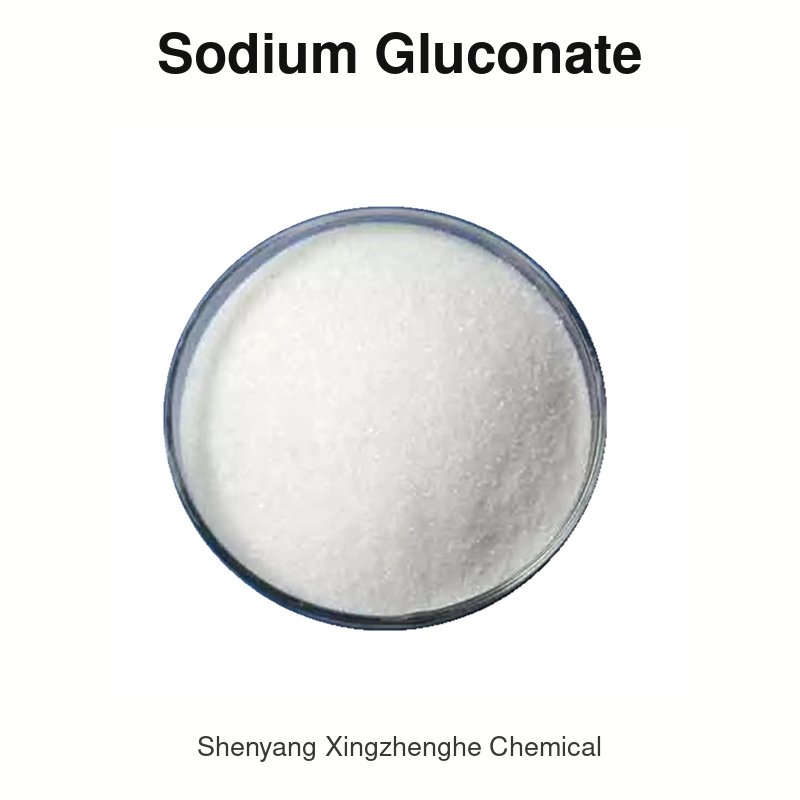
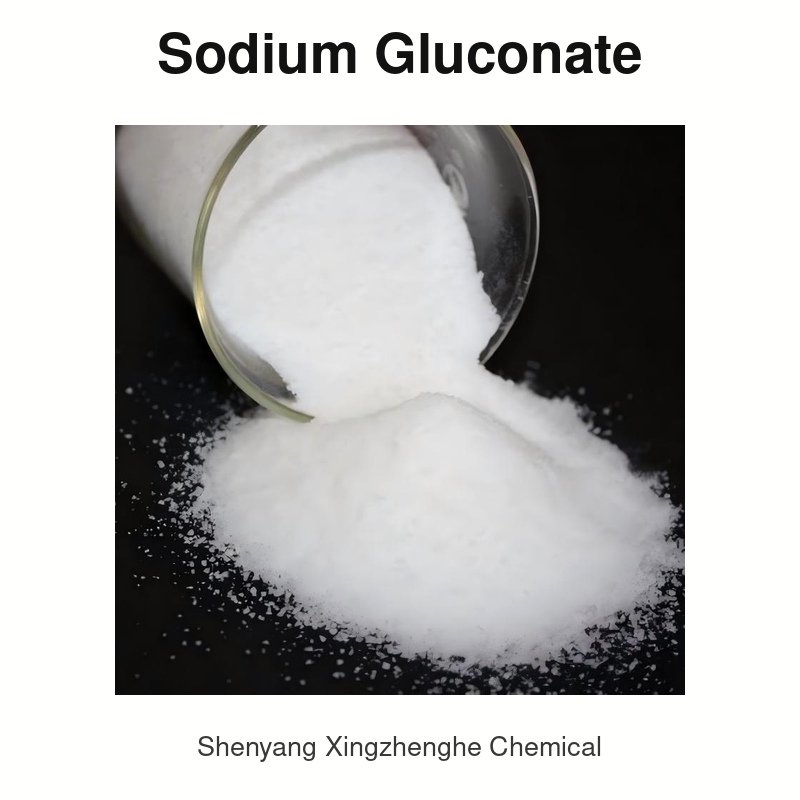
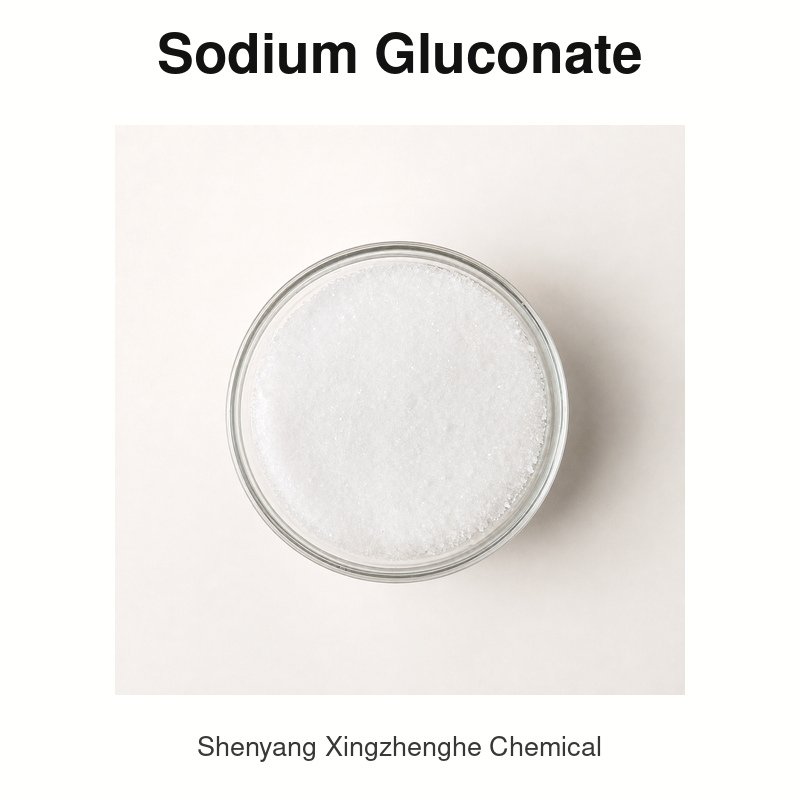
It is commonly supplied as a white to off-white crystalline powder or granule, depending on the product form and manufacturing process.
In concrete admixture formulations, sodium gluconate may be used as a retarding-related component and can influence setting and workability-retention behavior under suitable formulation conditions.
Its actual effect depends on factors such as:
- Cement type
- Dosage
- Temperature
- PCE formulation
- Concrete mix design
- Required setting time
Therefore, raw-material quality should be evaluated together with application performance.
sodium gluconate
2. Purity Is Important, but It Is Not the Only Specification
Purity is one of the first parameters buyers usually check.
A supplier may provide an assay value for sodium gluconate according to an agreed test method.
However, buyers should not assume that:
higher assay automatically means better performance in every concrete formulation.
Purity is important for raw-material control, but concrete performance also depends on:
- Cement compatibility
- Actual dosage
- PCE type
- Temperature
- Other formulation components
Therefore, assay should be treated as one part of the complete quality-control system.
3. Why Should the Test Method Be Confirmed?
A number on a technical data sheet is meaningful only when the testing basis is understood.
For example, when comparing two sodium gluconate suppliers, buyers should confirm whether the same or comparable analytical method is being used.
This is particularly relevant when comparing:
- Assay
- Moisture
- pH
- Reducing substances
- Chloride
- Sulfate
- Heavy metals
- Other agreed parameters
If two suppliers use different methods, direct comparison of the numbers may not always be appropriate.
For long-term purchasing, buyers can establish an internal incoming-inspection method and use the same procedure for each batch.
4. What Does Appearance Tell You?
Sodium gluconate is typically supplied as a white or off-white crystalline material.
Appearance inspection can help identify obvious changes such as:
- Unusual discoloration
- Caking
- Moisture exposure
- Foreign material
- Packaging damage
However, appearance alone cannot determine application performance.
A slightly different particle appearance does not necessarily mean the product performs differently in concrete.
Likewise, two visually similar samples may still show differences in specification or formulation behavior.
Appearance should therefore be used as an incoming-control item, not as the only quality criterion.
5. Why Does Moisture Matter?
Moisture is relevant for both product quality and handling.
Higher moisture may influence:
- Actual dry-material content
- Powder flow
- Caking tendency
- Storage condition
- Dosage calculation where dry basis is important
For this reason, moisture should be checked according to the agreed product specification.
During supplier comparison, buyers should also make sure that samples have been stored and transported under similar conditions.
A sample exposed to humid air may not represent the normal commercial product condition.
6. Solubility Is Important for Admixture Production
Many concrete admixture manufacturers first dissolve sodium gluconate in water before preparing a finished formulation.
Therefore, practical handling can matter.
Buyers may observe:
- Dissolution time
- Presence of visible insoluble material
- Solution clarity
- Sediment after standing
The result can depend on:
- Water temperature
- Agitation
- Concentration
- Water quality
- Sample condition
For meaningful supplier comparison, the same dissolution procedure should be used.
7. Does Faster Dissolution Mean Better Sodium Gluconate?
Not necessarily.
Fast dissolution may be convenient during production, but it should not be used alone to rank product quality.
Different particle sizes can dissolve at different rates.
A finer product may appear to dissolve faster, while a coarser crystalline product may take longer under the same mixing conditions.
What matters is whether the product meets the agreed specification and can be handled appropriately in the customer’s production process.
8. What About pH?
pH may be included in sodium gluconate quality-control documentation.
However, pH should be interpreted according to:
- Test concentration
- Water quality
- Temperature
- Test method
A pH value without test conditions has limited meaning.
When buyers compare different suppliers, they should verify that the conditions are comparable.
The same principle applies when setting internal acceptance limits.
9. Why Can Reducing Substances Matter?
Depending on the product specification and test standard, reducing substances may be included as a controlled parameter.
These substances can provide information about certain residual components associated with the manufacturing process.
Whether this parameter is important for a specific buyer depends on:
- Internal quality requirements
- Intended application
- Customer specifications
- Relevant standard
It should be evaluated as part of the agreed purchasing specification rather than treated as an isolated performance indicator.
10. Should Chloride and Sulfate Be Checked?
For some industrial users, chloride and sulfate may be included in the purchasing specification.
The importance of these parameters depends on the intended use and the buyer’s quality requirements.
If chloride or sulfate limits are important for a concrete admixture formulation, they should be clearly specified before purchase.
A supplier and buyer should ideally agree on:
parameter → test method → acceptance limit
instead of comparing incomplete technical data sheets after delivery.
11. Heavy Metals May Also Be Included in Quality Control
Some sodium gluconate specifications include limits for selected heavy metals.
Whether these parameters need to be controlled depends on the purchasing requirements and application.
For industrial procurement, buyers should request the documentation relevant to their own quality-control system rather than assume every market uses the same specification.
This helps avoid unnecessary testing while ensuring that important requirements are covered.
12. Why Is Batch Consistency Important?
A sample may pass initial testing, but commercial purchasing usually involves multiple batches.
For a concrete admixture manufacturer, consistency matters because raw-material variation can complicate formulation control.
A useful long-term evaluation can include:
- Assay
- Moisture
- Appearance
- Solution behavior
- Other agreed parameters
- Application performance
The purpose is not to expect every batch to produce an identical numerical result under all conditions.
The goal is to confirm that commercial batches remain within the agreed specification and suitable for the intended production process.
13. Why Should Buyers Keep Retained Samples?
For long-term supply, retaining a small sample from each commercial batch can be useful.
If a production issue appears later, the retained sample can help answer questions such as:
- Did the raw material change?
- Is the current batch different from the previous batch?
- Can the reported problem be reproduced?
- Is the difference related to storage rather than original production?
This creates a traceable link between:
batch number → raw-material test → finished admixture performance.
14. Do Similar COA Results Guarantee Similar Concrete Performance?
No.
A Certificate of Analysis can confirm whether a batch meets selected quality-control parameters.
But it cannot fully predict how the product will behave with every cement and admixture formulation.
For example, two sodium gluconate samples may show similar:
- Assay
- Moisture
- pH
but still need application verification in the buyer’s actual PCE formulation.
This is because concrete performance depends on the complete chemical and cementitious system.
15. Sodium Gluconate Should Be Tested with the Actual PCE Formulation
For a concrete admixture manufacturer, the most relevant test is often not sodium gluconate alone.
It is:
Sodium Gluconate + Actual PCE + Actual Cement
Suppose a finished admixture contains:
- Water-reducing PCE
- Slump-retaining PCE
- Sodium gluconate
- Defoamer
- Water
If a new sodium gluconate supplier is being evaluated, the first comparative test should preferably keep the rest of the formulation unchanged.
Then compare:
Current sodium gluconate
with
New sodium gluconate sample
under the same conditions.

sodium gluconate
16. Do Not Change Sodium Gluconate and PCE at the Same Time
This is important during supplier qualification.
If a manufacturer changes:
PCE + Sodium Gluconate
at the same time, and concrete behavior changes, it becomes difficult to identify the cause.
A better approach is:
Step 1: Keep PCE unchanged and replace only sodium gluconate.
Then test the formulation.
After that, other formulation changes can be evaluated separately if necessary.
This variable-control method makes troubleshooting more efficient.
17. What Should Be Observed in Concrete Testing?
Depending on the project, buyers can compare relevant properties such as:
- Initial slump or flow
- Workability retention
- Setting-related behavior
- Cohesion
- Bleeding
- Segregation tendency
- Strength at required ages
The test program should reflect the intended use.
If the purpose of sodium gluconate is related to setting and workability retention, testing only the initial slump is not enough.
Time-dependent observations are particularly useful.
18. There Is No Universal Sodium Gluconate Dosage
Even if a supplier provides a typical usage range, the actual dosage should still be verified in the customer’s formulation.
Required dosage can vary with:
- Cement
- Temperature
- PCE
- Concrete mix design
- Required setting behavior
- Transport time
Therefore, a dosage used successfully in one concrete plant should not automatically be copied into another formulation.
For supplier comparison, controlled dosage-gradient testing can be more useful.
19. How Should a Dosage Gradient Be Designed?
A basic test can use:
Lower Level → Reference Level → Higher Level
Other formulation variables should remain as consistent as practical.
Record:
- Initial workability
- Workability at relevant time intervals
- Setting-related behavior
- Concrete stability
- Other required properties
This allows the relationship between sodium gluconate dosage and concrete behavior to be observed.
The actual dosage levels should be selected based on the specific formulation and test objective.
20. Why Does Temperature Matter?
Sodium gluconate-related performance can be influenced by temperature.
A formulation tested in a controlled laboratory environment may behave differently under hot-weather production conditions.
Higher concrete temperature can affect:
- Hydration
- Workability loss
- Setting
- Interaction between admixture components
Therefore, a concrete admixture intended for summer production may need to be verified under representative temperature conditions.
21. Different Cement Can Produce Different Results
The same sodium gluconate dosage may produce different results with different cement sources.
Possible reasons include differences in:
- Mineral composition
- Fineness
- Sulfate balance
- Supplementary materials
- Hydration behavior
This is why concrete admixture manufacturers should consider cement compatibility when evaluating a new sodium gluconate source.
If the cement changes, the admixture formulation may need to be rechecked.
22. Why Price per Ton Should Not Be the Only Purchasing Criterion
Suppose Supplier A offers a lower sodium gluconate price per ton.
Supplier B offers a different price.
The cheaper raw material is not automatically the lower-cost solution if it requires:
- A different dosage
- Additional formulation adjustment
- More quality-control work
- Different logistics
A more useful evaluation is:
Raw-Material Price + Actual Dosage + Formulation Performance + Supply Conditions
This provides a more realistic procurement comparison.
23. Packaging Should Be Confirmed Before Ordering
Sodium gluconate is commonly supplied in bags.
Before purchase, buyers can confirm:
- Net weight per bag
- Bag material
- Pallet requirements
- Container loading
- Storage conditions
- Shelf-life information
For international trade, packaging requirements may also depend on destination and handling conditions.
Packaging should therefore be included in the quotation request.
24. Storage Conditions Matter
Sodium gluconate should be stored according to the applicable product recommendations.
For powder material, buyers generally need to pay attention to:
- Moisture
- Damaged packaging
- Long-term exposure to humid air
- Clean storage conditions
If bags absorb moisture during storage, powder flow and physical condition may change.
Therefore, warehouse management is also part of raw-material quality control.
25. What Documents Can Buyers Request?
Depending on purchasing procedures, buyers may request documents such as:
- Product specification
- Technical data sheet
- Safety data sheet
- Batch Certificate of Analysis
- Packing list
- Commercial documents
Not every document serves the same purpose.
For example:
TDS describes product characteristics.
COA records selected results for a specific batch.
SDS provides safety-related information.
Understanding these differences helps buyers use each document appropriately.
26. How Should a New Sodium Gluconate Supplier Be Evaluated?
A practical qualification process can be divided into several steps.
Step 1 — Compare Specifications
Check the agreed parameters and testing basis.
Step 2 — Inspect the Sample
Observe appearance, physical condition and packaging.
Step 3 — Conduct Incoming Laboratory Tests
Use the buyer’s standard method.
Step 4 — Test in the Current Admixture Formula
Replace only sodium gluconate.
Step 5 — Evaluate Concrete Performance
Check the properties relevant to the project.
Step 6 — Conduct Production Verification
Where necessary, confirm performance under representative plant conditions.
Step 7 — Monitor Commercial Batches
Record batch-to-batch data after regular supply begins.
This process provides more information than relying on price and COA alone.
27. What Information Should Buyers Provide When Requesting a Quote?
A sodium gluconate inquiry can include:
- Product: Sodium Gluconate
- Application: Concrete admixture, industrial use or another application
- Required Specification: If available
- Quantity
- Sample Requirement
- Packaging
- Pallet Requirement
- Destination
- Trade Term
- Required Documentation
For concrete admixture customers, it can also be useful to indicate whether sodium gluconate is being used with PCE.
This helps the supplier understand the actual purchasing requirement.
Frequently Asked Questions
What Purity of Sodium Gluconate Should Be Used for Concrete?
The required specification should be determined by the buyer’s formulation, quality standard and application requirements. Purity is important, but it should be considered together with other specifications and concrete testing.
Is Higher Purity Always Better?
Higher assay alone does not guarantee better concrete performance. Cement, PCE formulation, dosage and temperature also influence the final result.
Why Should Moisture Be Checked?
Moisture can affect powder condition, actual dry-material content, storage behavior and dosage calculation.
Can Two Sodium Gluconate Suppliers Be Compared Only by COA?
A COA is useful for batch quality control, but application testing is also recommended when changing suppliers for concrete admixture production.
Does Sodium Gluconate Need to Be Tested with PCE?
For concrete admixture applications, testing sodium gluconate in the actual PCE formulation provides more useful information than testing it only as an isolated raw material.
What Is the Standard Dosage of Sodium Gluconate in Concrete?
There is no universal dosage. The appropriate level depends on cement, temperature, PCE formulation, target setting behavior and concrete conditions.
Can Sodium Gluconate Be Stored for a Long Time?
Storage life depends on the product specification, packaging and storage conditions. Buyers should follow the supplier’s applicable storage recommendations and keep the product protected from unsuitable moisture exposure.
Sodium Gluconate Procurement Should Combine Specifications with Application Testing
When purchasing sodium gluconate for concrete admixtures, the evaluation should not stop at:
Purity + Price.
A more complete process is:
Specification → Test Method → Incoming Inspection → PCE Formulation Test → Concrete Test → Batch Consistency → Packaging and Logistics.
This approach helps buyers distinguish between a product that simply meets a few paper specifications and one that is appropriate for the actual production system.
Shenyang Xingzhenghe Chemical Co., Ltd. supplies sodium gluconate for applicable industrial and concrete-admixture applications. Product specifications, batch documentation, packaging information and samples can be provided according to purchasing requirements.
Actual suitability and dosage should be confirmed according to the customer’s PCE formulation, cement, concrete mix design, temperature and test conditions.