What Is Sodium Gluconate?
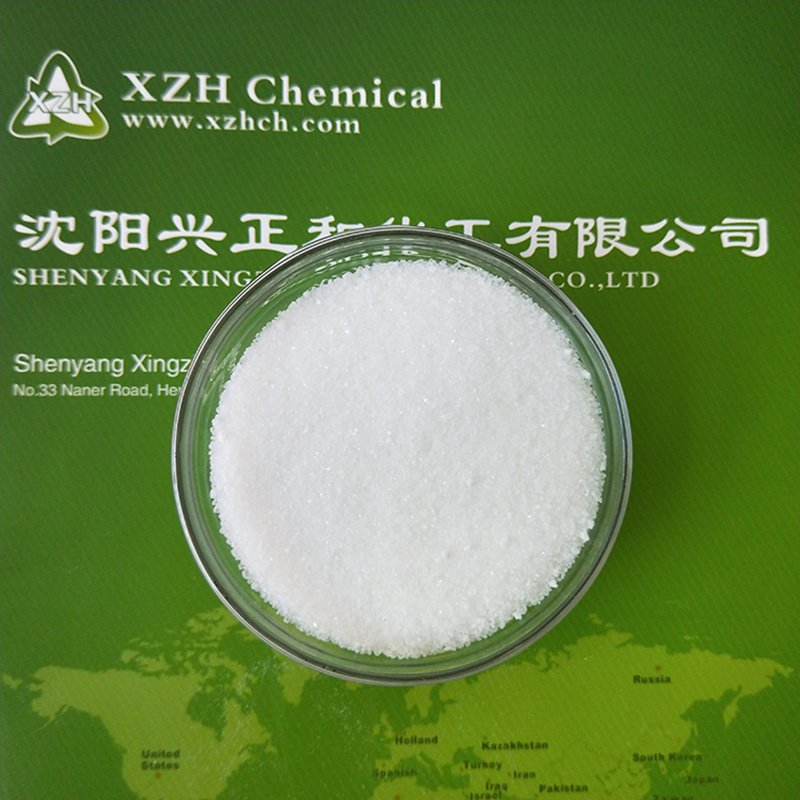
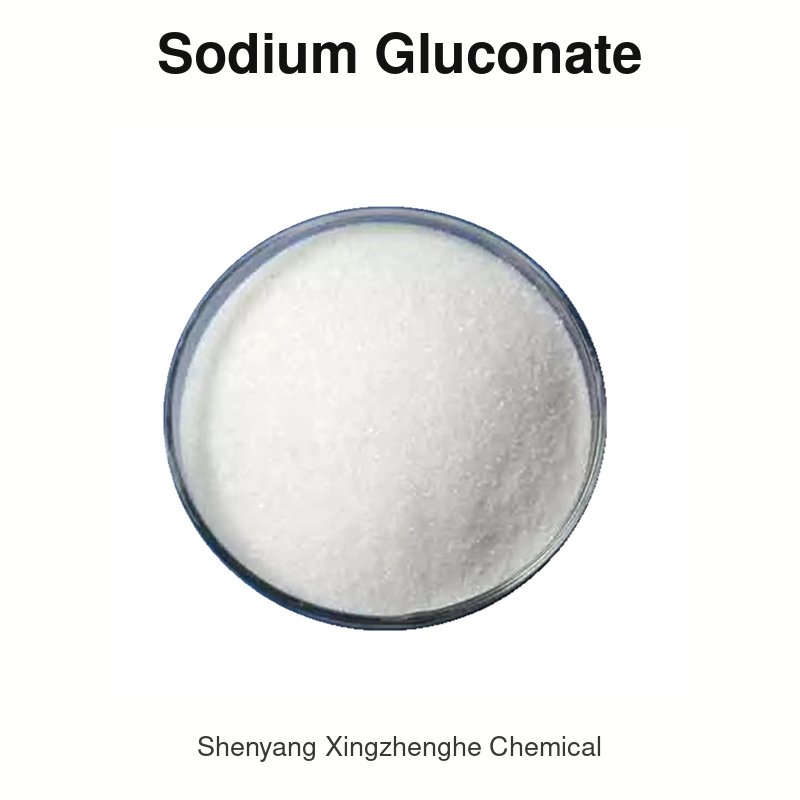
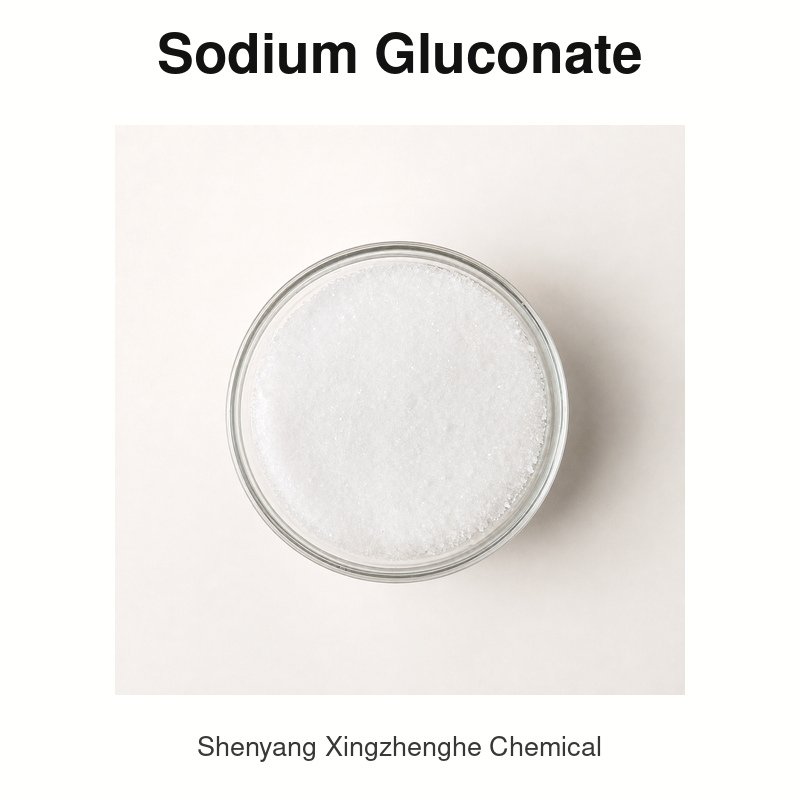
Sodium gluconate is the sodium salt of gluconic acid. Its CAS number is 527-07-1, and its molecular formula is C₆H₁₁NaO₇.
It is generally supplied as a white crystalline powder and is soluble in water.
Sodium gluconate is used in several industrial fields. One application is as a functional raw material in certain concrete admixture formulations.
In concrete technology, sodium gluconate is mainly associated with the regulation of early cement hydration and setting behavior.
This is why it is often discussed together with:
- concrete retarders;
- polycarboxylate superplasticizers (PCE);
- slump retention;
- ready-mix concrete;
- hot-weather concreting.
However, sodium gluconate should not be considered a universal solution for every concrete formulation.
Its actual effect depends on dosage, cement chemistry, temperature, supplementary cementitious materials and the other components in the admixture system.
1. Why Is Sodium Gluconate Used in Concrete?
After cement comes into contact with water, a series of hydration reactions begins.
These reactions gradually change the cement paste from a workable state into a hardened material.
For ready-mix concrete, this process must be controlled according to actual transportation and construction requirements.
If the concrete loses workability or begins to set before placement is completed, construction may become difficult.
Sodium gluconate can be used as a component of certain admixture formulations to influence early cement hydration and setting time.
For this reason, it is often used when a formulation requires controlled retardation.
2. Is Sodium Gluconate a Concrete Retarder?
Sodium gluconate can have a retarding effect on cement hydration and is therefore used as a set-retarding component in some concrete admixture systems.
However, its effect is dosage-dependent.
The final setting behavior also depends on factors such as:
- cement composition;
- sodium gluconate dosage;
- concrete temperature;
- water-to-binder ratio;
- supplementary cementitious materials;
- other chemical admixtures.
For this reason, the dosage should be established through testing with the actual cement and concrete formulation.
3. How Does Sodium Gluconate Affect Cement Hydration?
Cement hydration involves several mineral phases and chemical reactions.
Sodium gluconate can interact with ions in the cement-water system and influence early hydration processes.
This can delay the development of the hydrated structures responsible for setting.
The mechanism is more complex than simply “slowing down cement.”
Its behavior depends on the chemistry of the cementitious system.
This is one reason why the same sodium gluconate dosage may produce different results with two different cements.
sodium gluconate
4. How Does Sodium Gluconate Affect Concrete Setting Time?
In an appropriate formulation, increasing the amount of a retarding component can extend setting time.
However, the relationship should not be assumed to be identical for every cement.
For example, a dosage that provides the required setting time with Cement A may produce a different result with Cement B.
Important variables include:
Cement mineral composition
Different clinker compositions can respond differently.
Cement fineness
Finer cement has a larger reactive surface area.
Sulfate balance
The sulfate system of cement influences early hydration.
Temperature
Higher concrete temperatures can accelerate hydration.
Supplementary cementitious materials
Fly ash, slag, silica fume and other materials can alter the behavior of the overall binder system.
Therefore, sodium gluconate dosage should be determined from actual setting-time tests rather than from a fixed universal value.
5. What Is the Typical Sodium Gluconate Dosage in Concrete?
There is no single dosage that is appropriate for all concrete formulations.
Sodium gluconate is generally used at a relatively low percentage of the cementitious material, but the appropriate amount depends on the intended performance.
When evaluating dosage, it is important to specify whether the percentage is calculated based on:
- cement weight;
- total binder weight;
- finished liquid admixture;
- or another formulation basis.
These values should not be compared directly without confirming the calculation method.
For practical use, laboratory trials should begin within a range appropriate to the specific formulation and then be adjusted according to measured setting time and concrete performance.
6. What Happens If Too Much Sodium Gluconate Is Added?
More sodium gluconate does not automatically mean better concrete performance.
If the dosage is excessive for a particular cement system, possible effects can include:
- excessive delay in setting;
- delayed early strength development;
- extended finishing time;
- changes in construction scheduling;
- unexpected interaction with other admixture components.
For this reason, increasing sodium gluconate simply because the concrete is losing slump quickly may not address the actual cause.
The reason for the slump loss should first be identified.
7. Does Sodium Gluconate Improve Slump Retention?
This question requires some distinction between retardation and slump retention.
They are related, but they are not exactly the same thing.
Sodium gluconate can influence cement hydration and therefore may affect the rate at which the fresh concrete changes over time.
This can contribute to the workability-retention behavior of certain formulations.
However, slump retention also depends strongly on:
- PCE molecular structure;
- cement compatibility;
- aggregate quality;
- clay content;
- water-to-binder ratio;
- temperature;
- mixing procedure.
Therefore, sodium gluconate should not automatically be treated as a direct replacement for a slump-retaining PCE.
8. Sodium Gluconate and PCE: Why Are They Used Together?
Polycarboxylate superplasticizer and sodium gluconate perform different functions.
PCE
PCE is mainly used to disperse cement particles and reduce water demand while maintaining the required workability.
Sodium Gluconate
Sodium gluconate is mainly associated with the regulation of early hydration and setting behavior.
In a simplified form:
PCE → dispersion and water reduction
Slump-retaining PCE → time-dependent workability control
Sodium gluconate → hydration and setting-time regulation
This explains why these materials can appear together in a formulated concrete admixture.
They are complementary components rather than direct substitutes.
9. Can Sodium Gluconate Replace Slump-Retention PCE?
Not directly.
A slump-retaining PCE is designed through its polymer structure to influence workability retention over time.
Sodium gluconate acts through a different chemical mechanism.
If a concrete mixture is losing slump rapidly because the PCE is incompatible with the cement, simply increasing sodium gluconate may not solve the underlying problem.
A more complete investigation should consider:
- water-reducing PCE;
- slump-retaining PCE;
- sodium gluconate;
- cement;
- aggregates;
- temperature.
10. Why Does Sodium Gluconate Behave Differently with Different Cements?
Cement is not a chemically uniform material.
Two cements with the same strength class may still differ in:
- C₃A content;
- C₃S content;
- sulfate balance;
- alkali content;
- cement fineness;
- gypsum form;
- supplementary components.
These differences influence early hydration and chemical-admixture interactions.
As a result, the same sodium gluconate dosage can produce different setting times with different cement sources.
Whenever the cement source changes, retarder dosage should be re-evaluated.
11. How Does Temperature Affect Sodium Gluconate in Concrete?
Temperature is particularly important in ready-mix concrete.
High-Temperature Conditions
Higher temperatures generally accelerate cement hydration and can increase the rate of workability loss.
As a result, admixture formulations used during hot weather may require different adjustment from those used at moderate temperatures.
Sodium gluconate may be evaluated as part of the retarding system.
However, dosage should still be determined by testing.
Low-Temperature Conditions
At lower temperatures, cement hydration is already slower.
Using the same retarding formulation as in hot weather may result in a longer setting time than required.
For this reason, seasonal changes can require adjustment of the complete admixture formulation.
12. Why Is Sodium Gluconate Used in Ready-Mix Concrete?
Ready-mix concrete is not normally placed immediately after mixing.
It may need to travel from the batching plant to the construction site and may then wait before pumping or placement.
The actual process can include:
batching → transportation → waiting → pumping → placement → finishing.
The concrete therefore needs to remain workable for a period appropriate to the project.
A properly designed admixture system may use several components to regulate:
- initial workability;
- water reduction;
- slump retention;
- setting time.
Sodium gluconate can form part of this system where setting-time control is required.
13. Is Sodium Gluconate Suitable for Hot-Weather Concrete?
Sodium gluconate can be evaluated in concrete admixture formulations used under higher-temperature conditions because temperature influences cement hydration and setting.
However, it is not appropriate to determine dosage based only on air temperature.
Other relevant factors include:
- cement temperature;
- aggregate temperature;
- mixing-water temperature;
- concrete discharge temperature;
- transportation time;
- cement type;
- PCE type.
For hot-weather concrete, actual concrete-temperature testing provides more useful information than air temperature alone.
14. Does Sodium Gluconate Affect Early Strength?
Because sodium gluconate can delay early cement hydration and setting, excessive retardation may also delay early strength development.
This does not mean that every use of sodium gluconate will necessarily reduce the specified concrete strength.
The outcome depends on dosage and the complete concrete system.
For applications where early demolding or early strength is important, setting time and early-age strength should be tested together.
This is particularly relevant to precast concrete.
15. Sodium Gluconate in Ready-Mix vs Precast Concrete
The requirements of these two applications can be quite different.
Ready-Mix Concrete
Typical concerns include:
- transportation time;
- slump retention;
- pumping;
- hot-weather placement;
- controlled setting.
Precast Concrete
Typical concerns may include:
- short production cycles;
- early demolding;
- early strength;
- rapid mold turnover.
A retarding formulation suitable for long-distance ready-mix transportation may therefore not be appropriate for a precast plant requiring early demolding.
The admixture system should match the actual production process.
16. Sodium Gluconate vs Citric Acid in Concrete
Both sodium gluconate and citric acid can influence cement hydration, but they are chemically different materials.
Their behavior should not be assumed to be equivalent.
Differences can include:
- chemical structure;
- interaction with cement ions;
- dosage sensitivity;
- effect on setting;
- compatibility with other admixtures.
Therefore, replacing one with the other on a one-to-one weight basis is not recommended without testing.
17. Sodium Gluconate vs Sodium Citrate
Sodium gluconate and sodium citrate are also different chemical compounds.
Although both may be considered in formulations where hydration or setting control is relevant, their behavior in cement systems can differ.
When comparing them, practical testing should include:
- initial workability;
- workability retention;
- initial setting time;
- final setting time;
- early strength;
- later-age strength.
This is more informative than comparing chemical names alone.
18. Does Sand Quality Affect a Sodium Gluconate/PCE System?
Yes, particularly when sodium gluconate is used together with PCE.
Certain clay minerals in sand can interact strongly with polycarboxylate superplasticizers.
If the sand source changes, the concrete may show:
- higher PCE demand;
- lower initial workability;
- faster slump loss;
- changes in admixture response.
In such a case, increasing sodium gluconate may not correct the problem because the main issue may involve PCE interaction with clay.
Therefore, aggregate quality should also be checked when troubleshooting concrete admixtures.
19. Do Fly Ash and Slag Affect Sodium Gluconate Dosage?
Supplementary cementitious materials change the composition of the binder system.
Fly ash, slag and silica fume can differ in:
- particle size;
- surface area;
- chemical composition;
- reactivity;
- carbon content.
As a result, changing the type or dosage of supplementary cementitious materials can alter concrete workability and setting behavior.
When the binder composition changes substantially, the sodium gluconate dosage should be re-evaluated rather than assumed to remain unchanged.
20. How Should Sodium Gluconate Be Tested in Concrete?
A practical evaluation should keep other variables as constant as possible.
For example, use the same:
- cement;
- aggregates;
- binder content;
- water-to-binder ratio;
- PCE;
- mixing procedure;
- test temperature.
Then prepare several formulations with controlled changes in sodium gluconate dosage.
Depending on the application, evaluate:
Fresh Concrete
- slump;
- slump flow where applicable;
- workability retention;
- bleeding;
- segregation;
- air content.
Setting
- initial setting time;
- final setting time.
Hardened Concrete
- early strength;
- later-age strength.
This allows the dosage-performance relationship to be evaluated under controlled conditions.
21. Why Should Only One Variable Be Changed During Testing?
Suppose a trial simultaneously changes:
- PCE dosage;
- sodium gluconate dosage;
- water content;
- cement;
- and sand.
If the final result changes, it becomes difficult to determine which factor caused the difference.
A more useful testing approach is to keep most conditions constant and change one primary variable at a time.
For example:
Trial A: reference dosage
Trial B: slightly different sodium gluconate dosage
Trial C: another controlled dosage
Then compare the results.
After determining the sodium gluconate response, the PCE system can be optimized separately.
22. Common Problem: Setting Time Is Too Long
If concrete setting is considerably later than the project requires, possible factors include:
- sodium gluconate dosage;
- other retarding components;
- low concrete temperature;
- cement characteristics;
- combination of multiple retarders.
The first step should be to review all retarding components rather than assuming that one raw material is solely responsible.
23. Common Problem: Slump Loss Is Still Fast
If sodium gluconate has been added but slump loss remains rapid, possible causes include:
- inappropriate PCE type;
- insufficient slump-retaining PCE;
- cement compatibility;
- clay in sand;
- high concrete temperature;
- low water-to-binder ratio;
- changes in supplementary cementitious materials.
This is why retardation and slump retention should be evaluated separately.
24. Common Problem: Early Strength Is Lower Than Expected
If early strength changes after adjusting the admixture formulation, check:
- sodium gluconate dosage;
- total retarder content;
- water-to-binder ratio;
- concrete temperature;
- cement source;
- curing conditions.
The formulation should then be adjusted based on measured setting time and strength data.
25. What Specifications Matter When Buying Sodium Gluconate?
For industrial use, several basic parameters may be considered depending on the applicable product specification:
- assay;
- moisture;
- reducing substances;
- chloride;
- sulfate;
- pH;
- appearance;
- solubility.
However, a COA alone cannot predict concrete performance.
Two sodium gluconate samples that meet similar basic specifications should still be evaluated in the actual admixture or concrete formulation when application performance is important.
26. Is Higher-Purity Sodium Gluconate Always Better for Concrete?
Not necessarily in the sense of automatically producing better concrete performance.
Purity is an important product specification, but concrete performance also depends on:
- impurity profile;
- dosage;
- cement compatibility;
- PCE system;
- aggregate quality;
- temperature.
A product meeting the required specification should therefore be evaluated according to the intended application rather than by one numerical parameter alone.
27. Frequently Asked Questions About Sodium Gluconate in Concrete
What is sodium gluconate used for in concrete?
It is used as a functional component in certain concrete admixture formulations, particularly where regulation of cement hydration and setting time is required.
Is sodium gluconate a retarder?
It can have a retarding effect on cement hydration and is used as a set-retarding component in some formulations.
Does sodium gluconate improve slump retention?
It may influence workability retention through its effect on early hydration, but slump retention also depends strongly on PCE, cement, aggregates, temperature and mix design.
Can sodium gluconate replace slump-retaining PCE?
Not directly. They act through different mechanisms.
Can sodium gluconate be used with PCE?
They are used together in some formulated concrete admixture systems. Their respective dosages should be determined by testing.
What happens if too much sodium gluconate is used?
Excessive dosage may lead to longer-than-required setting and delayed early strength development, depending on the concrete system.
Does sodium gluconate work the same with every cement?
No. Cement composition and fineness can influence its effect.
Should the dosage change between summer and winter?
It may need adjustment because temperature influences cement hydration and setting. Testing under representative conditions is recommended.
28. How to Determine an Appropriate Sodium Gluconate Dosage
Rather than searching for one universal percentage, the dosage should be determined according to the required concrete performance.
Before testing, define:
- What cement is being used?
- What is the total binder content?
- Are fly ash, slag or silica fume included?
- What PCE is being used?
- What is the target water-to-binder ratio?
- What initial slump is required?
- How long must workability be maintained?
- What setting time is acceptable?
- What is the expected concrete temperature?
- Is early strength important?
- Is the concrete ready-mix or precast?
Once these conditions are known, sodium gluconate can be evaluated through controlled laboratory and concrete trials.
Conclusion
Sodium gluconate is used in certain concrete admixture formulations primarily because of its ability to influence early cement hydration and setting behavior.
Its role should be distinguished from that of a polycarboxylate superplasticizer.
PCE mainly provides cement dispersion and water reduction, while sodium gluconate is mainly associated with hydration and setting-time regulation.
In practical concrete production, sodium gluconate performance is influenced by cement chemistry, dosage, temperature, supplementary cementitious materials, aggregates and the complete admixture system.
For this reason, there is no universal sodium gluconate dosage suitable for every concrete formulation.
A practical selection process should combine product specifications, cement compatibility testing, setting-time measurements, workability-retention testing and strength evaluation.
When the cement source, temperature or binder composition changes, the admixture formulation may also require re-evaluation.